Books I've read
Select a book to jump directly to my notes.
- Dune Series
- The Hound of the Baskervilles
- Lord of the Flies
- The Odyssey
- The Iliad
- The Metamorphosis
- Brave New World
- Solaris
- The Stranger
- Labyrinths
- War with the Newts
- Nausea
- A Brief History of Time
- Crime and Punishment
- Faust
- The Divine Comedy
- Dracula
- Being and Time
- Thus Spake Zarathustra
- Nineteen Eighty Four
- The Sorrows of Young Werther
- The Prince
- Communist Manifesto
- The Republic
- Tractatus Logico-Philosophicus
- Tao Te Ching
- What The Buddha Taught
- Investigations Of A Dog
- The Book Of Tea
- White Holes
- The King In Yellow
- The Aeneid
- Paradise Lost
- Paradise Regained
- Frankenstein
- Hamlet
- The Art of War
- The Doors Of Perception
- Island
- The Devils Of Loudun
- The Royal Game
- Herland
- The Yellow Wallpaper
- Apology
- The Thing On The Doorstep And Other Weird Stories
- The Dreams In The Witch House And Other Weird Stories
- The Call Of Cthulhu And Other Weird Stories
- The Tempest
- The Prophet
- De Antichrist
- God Emperor Of Dune
- Mein Kampf
- The Sun Also Rises
- The Old Man and the Sea
- The Nicomachean Ethics
- Discourses Of Epictetus
- Enchiridion Of Epictetus
- The Myth of Sisyphus
- Fahrenheit 451
- The Trial
- No Longer Human
- Meditations
Reading Notes
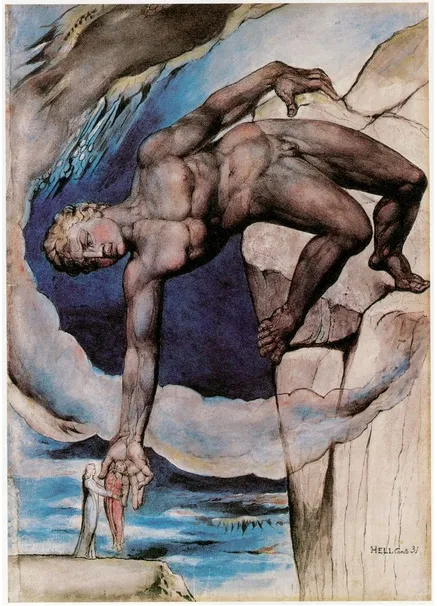
The Divine Comedy
Author: Dante Alighieri
Status: Finished
I have read Wordsworth Classics edition translated by H. F. Cary, which preserves the poetic style that reads really nicely, but I found it really easy to get lost in. Now I am re-reading the book along with a lecture by Jiang Xueqin with Allen Mandelbaum translation. Here I will write about key points and my interpretation of the book.
Notes:
The book is available here , note that same as before mentioned lecture I will start with Paradiso.
Paradiso brief introduction:
Here Dante attempts to describe experience that lies beyong ordinary human language, he is accompanied by his love Beatrice who serves as his guide. Throughout Paradiso Dante draws oin both Christian theology and classical philosophy. Rather than rejecting pagan thinkers, he frequently presents them as having grasped part of the the truth, which is a very revolutionary idea at the time. He touches on important Christian themes like free will, afterlife, punishment and more that will be further discussed.
Canto I
Dante and Beatrice ascend to the first sphere, the Moon. The central question is how can human body rise into heaven? Beatrice answers that everything naturaly seeks its proper place, which means that the soul naturaly seeks God, however because we have free will we can turn aways from him.
Canto II
Dante and Beatrice discuss dark spots on the Moon. Inially this unfolds as a scientific debate, in which Dante the poet shows us the proper role of reason. Through Beatrice he says that while observation and logical arguments are indispansable, they are not sufficient to fully explain reality. To understand the universe one must consider the metaphysical order and its ultimate origin in God. He points us to our imagination and intuition which are crutial tools in understanding his work.
Canto III
We visit the first sphere of heaven. Souls that were placed here failed to keep their vows. We meet Piccarda who was a nun but was forced to break her vow by her brother who forcibly removed her from the convent and forced her into marriage. The main question is are you morally responsible if someone forces you? Beatrice explains that there are two kinds of will: absolute and conditional. Even though her conditional will was broken by her brother, inwardly she stayed faithful to God. For this reason she is in heaven.
Canto IV
Here Beatrice explains to Dante that the souls he can see in heaven only appear to him in a physical way so he could understand them. But in reality their true home is beyong the physical heavens. They also discuss Plato's similar idea, showing Dante's respect for pagan philosophy.